Disconnected data
Machines, ERP/MES, quality checks and manual reports live in separate places.

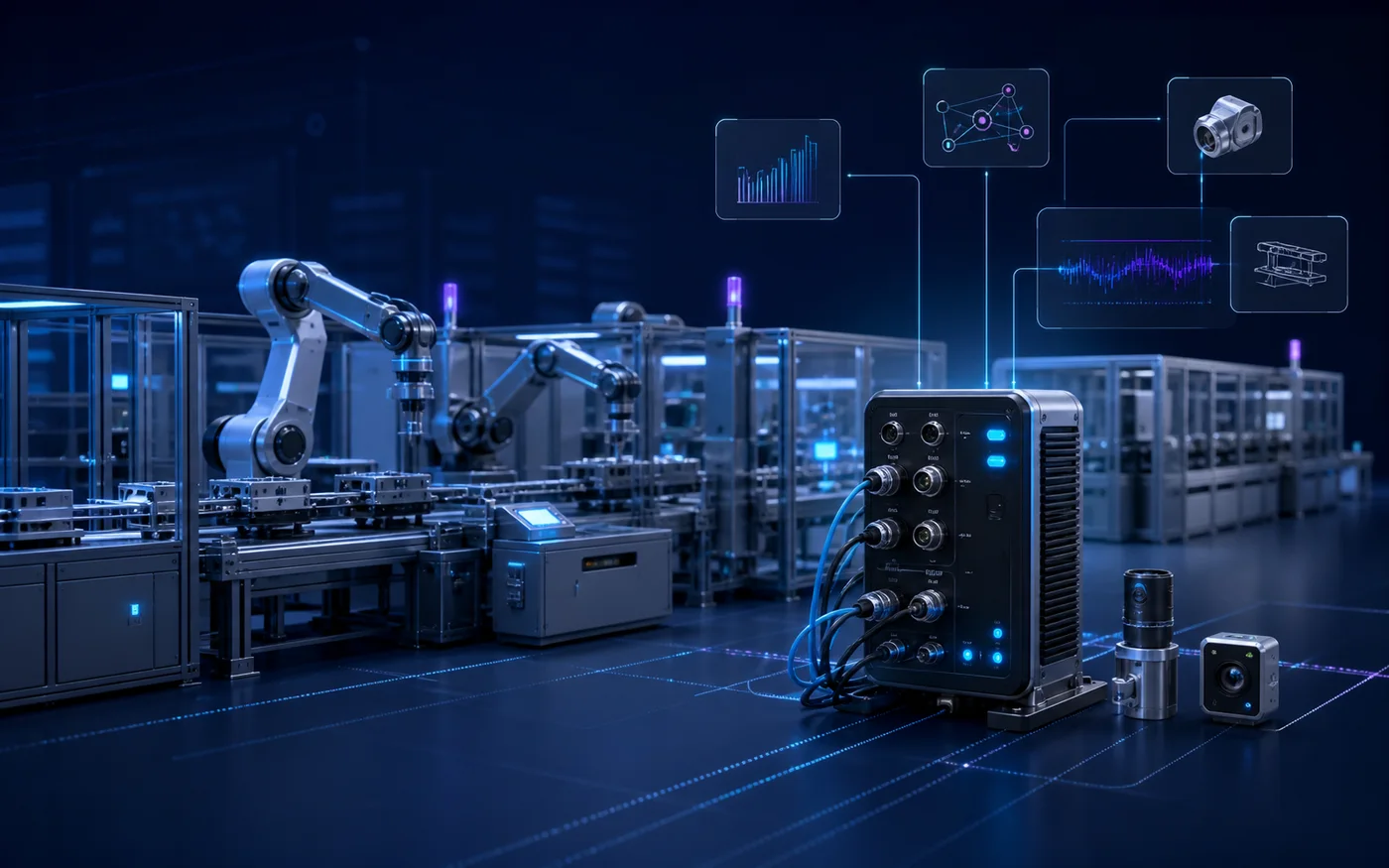
Connect machines, production signals and operational teams. See what is happening, understand why and build toward smarter action.
Request a PRODUCIA DemoFactories generate operational data every day, but paper records, spreadsheets, operator entries and disconnected systems keep it apart. By the time management receives a report, the problem may have already happened.
Machines, ERP/MES, quality checks and manual reports live in separate places.
A machine stops, output slips or a quality issue develops—and it surfaces after the shift.
Teams respond to problems instead of preventing them, and improvement stays guesswork.
Producia creates a connected intelligence layer between the physical factory and management. The goal is not simply to collect machine data—it is to turn operational data into decisions.
Machines, PLCs, sensors, IoT devices and gateways.
Continuous machine and production information.
Link data with orders, targets, shifts and operators.
Live dashboards for every level of the plant.
Performance, downtime, behaviour and trends.
Unusual patterns, deviations and anomalies.
Emerging issues and production patterns.
Alerts, recommendations and workflow actions.
Historical intelligence for continuous improvement.
You don’t have to transform the entire factory on day one. Start with visibility and build toward intelligent manufacturing, step by step.
Know what is happening. Machine and production monitoring.
Know how performance compares. Targets, KPIs and history.
Understand why. Patterns, correlations and anomaly detection.
Understand what may happen next. Forecasting and risk.
Know what should happen next. Recommendations and alerts.
AI agents and governed automation assist decisions.
Move beyond end-of-shift spreadsheets with a connected view of output, targets, machine state and operational exceptions.
Follow output, progress, current orders and target achievement.
Understand runtime, idle state, stops, counts and machine events.
See when interruptions happen, how long they last and what repeats.
Compare productivity, utilization and output across operating shifts.
Track target versus actual by line, product, machine or production order.
Use live and historical KPIs to support continuous improvement.
Bring machine, production and operational context together so teams can investigate faster and create a dependable record of response.
Traditional software follows Data → Dashboard → Human analysis. Producia is designed around Data → AI → Insight → Recommendation → Action.
Producia is positioned as a connected-operations and intelligence layer that can complement existing ERP, MES and enterprise systems.
Analytics, anomaly detection, forecasting and governed recommendations.
Dashboards, mobile experiences, alerts, reports and APIs.
Device management, ingestion, production context and processing.
MQTT, APIs and suitable industrial communication protocols.
Gateways, local collection and edge processing.
Relevant production counts, states, events and sensor telemetry.
Machines, PLCs, counters, sensors and industrial equipment.
Advanced modules are scoped and confirmed during discovery. They are not represented as production-ready until validated for the deployment.
Know what is happening across the production floor.
Use current operational information instead of delayed reports.
Automate collection and reporting of production data.
Understand machine behaviour, runtime and downtime.
Compare targets against actual production continuously.
Identify operational issues earlier in the shift.
Replace assumptions with measurable intelligence.
Find recurring problems and improvement opportunities.
Infoz spans IoT/IIoT from sensors and devices through gateways, cloud platforms, analytics and applications, alongside AI-enabled products and enterprise systems. That gives Producia a foundation as an end-to-end manufacturing technology platform—not a standalone dashboard.
Integration is designed around available machine interfaces, PLCs, controllers, sensors and gateway options. Each factory environment is assessed before deployment.
The architecture can support centralized multi-machine, multi-line and multi-site visibility, subject to the agreed deployment design.
No. Its strongest position is as a manufacturing intelligence and connected-operations layer that complements existing business and production systems.
Potentially. Feasibility depends on existing interfaces and whether signals can be captured through controllers, PLCs, sensors or retrofit gateways.
The next step is turning that data into intelligence. Connect your machines. Understand production. Identify opportunities. Build a smarter manufacturing operation.